Showing posts with label books. Show all posts

Tuesday, 13 May 2014

Five Books (not about Coaching) that can Transform your Coaching

STOP PRESS: I am delighted to announce that Arton 'Float Sting ' Baleci and I are running a new course on learning - for coaches, teachers and other learners!For more information, and the register, please go to: http://t.co/hqdr4ksJPq


It seems to me that coaching, and teaching in general, are basically thinking activities. Thought is required in planning, throughout delivery of sessions, and during the reflective phase that necessarily follows it (at least, it is a necessary element  

All of the good and great coaches and teachers I have known have had ceaselessly enquiring minds. And most of them have repeatedly stepped away from the cosy certainties offered by their areas of specialism, and have looked elsewhere in the pursuit of new insights and new ways of thinking.

I certainly do not regard myself as a great coach or teacher, but I have benefited enormously, both professionally and personally, from the books I list here have inspired me, others have infuriated or disorientated me. But all of them have left their mark on my thinking about thinking about sport. 
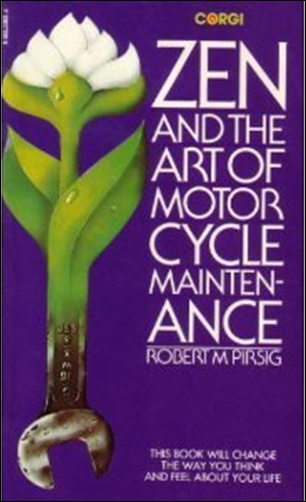

Robert Pirsig, Zen and the Art of Motorcycle MaintenanceDon't be put off by the title: it is not really about motorcycles, or about Zen.  This is an engaging, thought-provoking book, probably best described as 'philosophical fiction'. The discussion about the nature and development of Quality, in particular, should be of great interest and relevance to coaches and teachers.

"We take a handful of sand from the endless landscape of awareness around us and call that handful of sand the world."
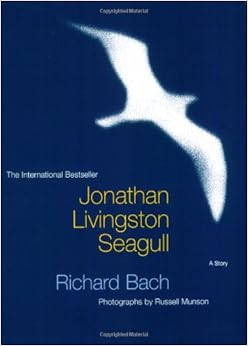


Richard Bach, Jonathan Livingston Seagull
Sometimes mistaken for a story about a seagull. OK, it is a story about a seagull. But is also a parable about skill, perfection, and the meaning of a life worth living.  And it is very short.

"Don’t believe what your eyes are telling you. All they show is limitation. Look with your understanding. Find out what you already know and you will see the way to fly.”


Ben Goldacre, Bad Science
Sports coaching is awash with bullshit.  Gimmicks, fads, and magical nonsense rob us all of time, money, and professional integrity.  Read this funny and shocking book, and see the light!


"Repeat after me: pharma being shit does not mean magic beans cure cancer."


Gary Marcus, Guitar ZeroA cognitive scientist tries to learn to play the guitar. This is probably the best book, to date, that tries to bridge the gap between what is known about how people learn complicated skills and what this can mean in practice.  However, just as important is the author's account of the joys and frustrations of learning and then mastering a new skill.  A great book.


"To dismiss talent is to ignore all evidence from biology.”


Victor Frankl, Man's Search for Meaning
A psychiatrist chronicles is experiences as an inmate at the Auschwitz concentration camp during the Second World War. Frankl's story is remarkable, and it is beautifully told. The lessons he learned and shares from this nightmare are, for many people, life changing. His discussion of the importance of meaning in one's life has enormous implications for education and sport.

"Those who have a 'why' to live, can bear with almost any 'how'."


STOP PRESS: I am delighted to announce that Arton 'Float Sting ' Baleci and I are running a new course on learning - for coaches, teachers and other learners!For more information, and the register, please go to: http://t.co/hqdr4ksJPq


Sunday, 22 September 2013

6 Must-Read Books on Coaching and Learning

Coaching and teaching are essentially thinking activities. Excellent coaching and teaching demand imagination, reflection and analysis. For this reason, books are, and will remain, the one necessary resource.  Fashions come and go in education, but we have found nothing to replace the quiet, simple act of reading, and the intellectual revolutions that it promises.

This blog recommends six really useful books on coaching and learning (subsequent blogs will look at motivation, and other areas of interest to coaches and teachers).  I'd love to hear your thoughts about them, and any suggestions of your own, via the wonderful world that is Twitter - .


“The more that you read,the more things you will know.The more that you learn, the more places you'll go.”(Dr. SeussI Can Read With My Eyes Shut!)


Stafford, I. (Ed.). (2011) Coaching children in sport. London: Routledge.
The most authoritative book on the subject.  Covers a wide range of subjects in and accessible way.


Bransford, J.D. Brown, A. L., & Cocking, R. R. (2000). How People Learn.  Washington, DC: National Academy Press
Quite technical in parts, a bit old, and long, but this is the best single-volume guide that explains the science of learning.


Myerson, J. (2005) Not a Games Person.  London: Yellow Jersey Press.
A memoir of someone who didn’t ‘get’ sport!  Very funny, but also revealing for those of us take the joy of sport for granted.


Medina, J. (2010)  Brain Rules: 12 principles for surviving and thriving at work, home, and school.  Seattle, WA: Pear Press.
A well-written and engaging book on the brain and learning (and some other things).  Much less awful than most books on the brain!


Pink, D. H. (2010)  Drive: The surprising truth about what motivates us.  Edinburgh: Canongate Books.
An excellent book on motivation, with ideas that can be immediately applied to coaching and teaching.


Physical Education for Learning: a guide for secondary schools.  London: Continuum.
A wide-ranging and comprehensive book, focusing on the support of learning in physical education and sport.

Tuesday, 7 February 2012

Coaches' Cross-Training: 10 steps to becoming a better coach (and human being)

According to Wikipedia ...

Cross-training (also known as circuit training) refers to an athlete training in sports other than the one that athlete competes in with a goal of improving overall performance. It takes advantage of the particular effectiveness of each training method, while at the same time attempting to neglect the shortcomings of that method by combining it with other methods that address its weaknesses.


Why should athletes have all the fun?


Research suggests that coaches tend to rely on a relatively narrow range of professional development practices. It also shows that these practices rarely lead to significant improvement in performance.


So, perhaps we need to try something new ...


Learn something new
. By far the best way to understand your students is to become a student yourself. It doesn't really matter what you learn, although the less 'relevant' the better. Experience being a beginner, and all that it entails.


Read
. There is a huge amount of information available today, and some of it is not completely crazy! The internet, in particular, gives mostly free access to endless books, articles, blogs and newspapers. Quick tip: if you are searching for something wholesome and challenging to read, don't use Google; turn, instead, to its geeky, bookish half-brother Google Scholar (http://scholar.google.com). Your life will never be the same again.


Take time considering your own body. Apart from the obvious benefits of practices like Yoga or Tai Chi, or other 'somatic' methods, these practices encourage attention on the internal experience of the body.  
And the body, after all, is the thing all sports people have in common.


Watch others coach. By all means, watch those who do your sport. When you do that, you pick up tips and ideas from those who have followed - more or less - the same training programme as you. But if you are looking for radically new ideas that force you to rethink your whole philosophy of coaching, you really need to connect with those from completely different backgrounds. For a start, how about one of the following: a golf professional; a PE teacher; a martial arts instructor.


Go to conferences. Sport conferences are a mixed bag. Some are great; others are poor. The best events have inspirational keynotes from leaders in the field, stimulating workshops and seminars, and good food. But even the most desperate affair has one compelling reason to attend: other coaches to talk to. Oh, and the bar.


Keep a journal. In this modern world, it is possible to keep a journal online, and there are some excellent IT programs to help you structure your thoughts, and even remind you to write in the first place. Personally, I prefer old-fashioned paper (Moleskine, to be precise). Either way, there is little doubt that keeping a regular journal helps record and clarify thoughts in way that simple reflection sometimes cannot. As the great philosopher Karl Popper once said, "My pen is cleverer than I am!"


Learn to spot bullshit. Sport, like almost every other of life, is bombarded by bullshit: from special training gizmos, from physio-neuro-psycho-bollocks, to gurus. There are some great books discussing the dangers of bullshit, such as Ben Goldacre's Bad Science, and Michael Shermer's Why People Believe Weird Things, and countless websites [search "skepticism"]. Next time someone claims that a little crystal in a magical wristband improves balance or coordination or 'energy', hit them with one fo the books.


Read business books. Business books have two great virtues. First, they talk about many of the topics that occupy sports coaches. Obviously, some of them talk specifically about coaching, and it is a fascinating exercise to compare the assumptions and practices of sports and business coaches. But there are also books about communication skills, leadership, change, values and vision; all topics of interest to sporty folk. Second, most business books seem to be aimed at a Primary School reading age. They tend to be short, to the point and accessible. Different people seem to have different tastes in these books. My favourites include The One Minute Manager, Influence, and FIsh!


Use social media. Facebook, Twitter, LinkedIn, MySpace, Google+, and their kin have become enormously popular in recent years, with hundreds of millions of people around the world signing up. Whether or not a 'FB friend' is a real friend or not is an interesting question for late-night discussion (on FB!). But it is difficult to argue that social media offer sports coaches a remarkable access to information and insights from professional colleagues from every corner of the globe.


Learn to drink proper, Italian espresso. This is nothing to do with coaching. It is just one of those things every civilised person needs to learn!


So, what do you think? What would you add to the list? What practices have you found particularly helpful?


Please share your insights.

Thursday, 29 December 2011

Great Books on Sport and Education

I will be introducing a new feature to this blog in the New Year: expert book lists.  Some seriously top-notch people have already agreed to contribute their lists.  So look forward to those!


Meanwhile, I thought I'd kick things off with some recommendations of books that belong at the cusp of Education and Sport.  PLEASE let me now your own ideas to add to this list.  Assuming I agree with you, I'll start to prepare a sequel to this list, which can be published later.


You'll notice that some of these books  are, in one way or another, connected to me.  What can I say?  It's my list!!


In fact, to prove the point, I will start with a couple of my own books!


The first book is a recent guide to teaching Physical Education.  With contributions from many of the world's leading authorities on the subject, Physical Education for Learning focuses on the ways by which teachers can promote student learning in and through sporting activities.  There are quite good books on PE teaching out there, and a few really bad ones, but none matches this book as a 'state of the art'.


The Routledge Physical Education Reader is a more theoretical book.  It was designed to bring together the most important articles and chapter, dating back to the 1970s.  I think David Kirk and I put together a really strong collection.  It's for teachers, obviously, but also sports coaches and general education people.


My next book is about learning.  Learning is the fundamental concern of teachers and coaches, yet there is a very low level of understanding about how it actually happens.  In my experience, many people stick to a naive, simplistic notion in which learning resembles filling an empty bucket!  Many practices are ineffective precisely because their designers are ignorant of recent research into learning.  This book - How People Learn - is just the best book I have found on the subject.


The next book is the update of the classic book Coaching Children in Sport.  In fact, it is really a completely new product, reflecting the great advances in coaching and sports science in recently years.  Ian Stafford book is a great collection of contributions from some impressive writers and practitioners, and strikes a really nice balance between theory and practice.


The fifth and final book on this list is not really a sport or education book at all.  It is a memoir of a childhood.  Julie Myerson is a great writer, and her story of her battle with all things sportive is very entertaining.  Also, it offer a valuable insight into what it is like to be a child who is Not A Games Person, strange as that seems!


Of course, these are just my ideas.  Please let me know your thoughts.


I look forward to hearing from you.