I am delighted to report that I have recently started a: with the hugely popular psychology today magazine!
The focus of the column is the relationship between sport, physical activity and learning.
I will continue to publish entries to Talking Education and Sport. And in the meantime, please do check out my new venture!

Sunday, 15 June 2014


Saturday, 17 May 2014
Cricket versus Barbarism
Having just returned from watching the German Cup Final, with all of the diving, playing for fouls, and general gamesmanship that are often just accepted as part of the modern game, I find myself drifting towards one of my perennial ruminations about the place of "sport" in professional sport.
Then I found an short earlier post about another game. And it seemed pertinent, somehow.

I'd like to start with a quiz. Who said this
The stimulus for my mention of cricket is an interesting article in the magazine All About Cricket. The author, Safi Thind, reports on the emergence of a number of initiatives that have used cricket as a vehicle to combat problems like misbehaviour at school and youth delinquency.
For example,
Another charity - Cricket for Change - gives some clues about the selection of cricket as the means to these ends:

Cricket, above all other sports that emerged from Victorian Britain (which is, let's face it, almost all sports) has the reputation for developing decent behaviour.
This was the view of the philosopher David Stove. Cricket, he wrote, “requires gentlemanliness, and teaches it”. And such gentlemanliness is expressed both in the nature of the game (and its often extreme delays of gratification) and its spirit. In other words, cricket teaches decent behaviour by providing an environment in which such behaviour is practiced.
Of course, it is not difficult to undermine a simple equation between cricket and civility: bodyline, ball-tampering, match fixing, and so on. But that the vast majority of cricket matches manage to maintain an over-riding air of good manners and good spirits - even at the very highest levels - does suggest that these schemes are on to something.

And the source of the claim that cricket civilises people that I quoted at the start of this entry? It was that great humanitarian Robert Mugabe.
Then I found an short earlier post about another game. And it seemed pertinent, somehow.
_________________
I'd like to start with a quiz. Who said this
“Cricket civilises people and creates good gentlemen. I want everyone to play cricket ..; I want ours to be a nation of gentlemen.”I will reveal the answer at the end of this entry.
The stimulus for my mention of cricket is an interesting article in the magazine All About Cricket. The author, Safi Thind, reports on the emergence of a number of initiatives that have used cricket as a vehicle to combat problems like misbehaviour at school and youth delinquency.
For example,
"StreetChance "aims to increase aspiration, promote mutual respect, and enhance relationships with others, including schools, police and the wider community by providing structured coaching and competitive opportunities for young people."
Another charity - Cricket for Change - gives some clues about the selection of cricket as the means to these ends:
"We see cricket, because of its history throughout the world, as being uniquely able to transcend the major urban racial groups, black, white and Asian and because it's a non-contact game, is also uniquely able to help young people with a disability share in the benefits of competitive team sport.
We believe that cricket can be used to make a positive impact on the lives of individuals and communities and for the last 30 years we have used our unique cricket programmes to help young people, in particular, make positive choices about their lives and to help them feel good about themselves."
Cricket, above all other sports that emerged from Victorian Britain (which is, let's face it, almost all sports) has the reputation for developing decent behaviour.
This was the view of the philosopher David Stove. Cricket, he wrote, “requires gentlemanliness, and teaches it”. And such gentlemanliness is expressed both in the nature of the game (and its often extreme delays of gratification) and its spirit. In other words, cricket teaches decent behaviour by providing an environment in which such behaviour is practiced.
Of course, it is not difficult to undermine a simple equation between cricket and civility: bodyline, ball-tampering, match fixing, and so on. But that the vast majority of cricket matches manage to maintain an over-riding air of good manners and good spirits - even at the very highest levels - does suggest that these schemes are on to something.
And the source of the claim that cricket civilises people that I quoted at the start of this entry? It was that great humanitarian Robert Mugabe.
_________________
And if Mugabe cannot persuade you of the virtues of cricket, take a look at the story of a truly remarkable Cricket club: the Compton Cricket club in California, USA ...
Tuesday, 13 May 2014
Five Books (not about Coaching) that can Transform your Coaching
STOP PRESS: I am delighted to announce that Arton 'Float Sting ' Baleci and I are running a new course on learning - for coaches, teachers and other learners!For more information, and the register, please go to: http://t.co/hqdr4ksJPq
It seems to me that coaching, and teaching in general, are basically thinking activities. Thought is required in planning, throughout delivery of sessions, and during the reflective phase that necessarily follows it (at least, it is a necessary element
All of the good and great coaches and teachers I have known have had ceaselessly enquiring minds. And most of them have repeatedly stepped away from the cosy certainties offered by their areas of specialism, and have looked elsewhere in the pursuit of new insights and new ways of thinking.
I certainly do not regard myself as a great coach or teacher, but I have benefited enormously, both professionally and personally, from the books I list here have inspired me, others have infuriated or disorientated me. But all of them have left their mark on my thinking about thinking about sport.
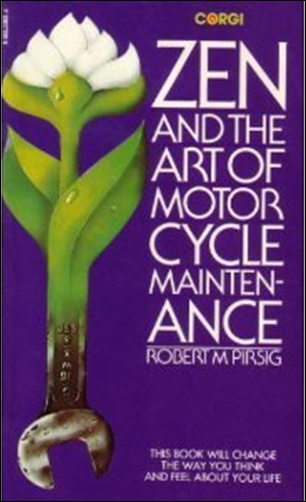
Robert Pirsig, Zen and the Art of Motorcycle MaintenanceDon't be put off by the title: it is not really about motorcycles, or about Zen. This is an engaging, thought-provoking book, probably best described as 'philosophical fiction'. The discussion about the nature and development of Quality, in particular, should be of great interest and relevance to coaches and teachers.
"We take a handful of sand from the endless landscape of awareness around us and call that handful of sand the world."
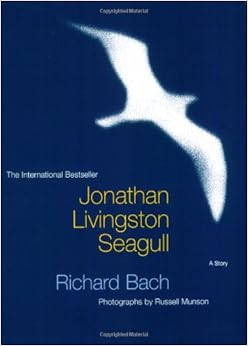
Richard Bach, Jonathan Livingston Seagull
Sometimes mistaken for a story about a seagull. OK, it is a story about a seagull. But is also a parable about skill, perfection, and the meaning of a life worth living. And it is very short.
"Don’t believe what your eyes are telling you. All they show is limitation. Look with your understanding. Find out what you already know and you will see the way to fly.”

Ben Goldacre, Bad Science
Sports coaching is awash with bullshit. Gimmicks, fads, and magical nonsense rob us all of time, money, and professional integrity. Read this funny and shocking book, and see the light!
"Repeat after me: pharma being shit does not mean magic beans cure cancer."

Gary Marcus, Guitar ZeroA cognitive scientist tries to learn to play the guitar. This is probably the best book, to date, that tries to bridge the gap between what is known about how people learn complicated skills and what this can mean in practice. However, just as important is the author's account of the joys and frustrations of learning and then mastering a new skill. A great book.
"To dismiss talent is to ignore all evidence from biology.”

Victor Frankl, Man's Search for Meaning
A psychiatrist chronicles is experiences as an inmate at the Auschwitz concentration camp during the Second World War. Frankl's story is remarkable, and it is beautifully told. The lessons he learned and shares from this nightmare are, for many people, life changing. His discussion of the importance of meaning in one's life has enormous implications for education and sport.
"Those who have a 'why' to live, can bear with almost any 'how'."
STOP PRESS: I am delighted to announce that Arton 'Float Sting ' Baleci and I are running a new course on learning - for coaches, teachers and other learners!For more information, and the register, please go to: http://t.co/hqdr4ksJPq

Saturday, 19 April 2014
EMBRACING WRONG
STOP PRESS: I am delighted to announce that Arton 'Float Sting ' Baleci and I are running a new course on learning - for coaches, teachers and other learners!For more information, and the register, please go to: http://t.co/hqdr4ksJPq
From an early age, we are conditioned to want to be right. We learn to need to be right.
Parents applaud their children when they do something well, or answer a question correctly. At school, we are rewarded and celebrated for passing tests, and can suffer in any number of ways for failing them.
The lesson is continually reinforced as we grow older. Promotions, reputations, careers are built on our capacity for right thinking. Or, at least, the appearance of right thinking. To be right is to succeed.
This is fine. It is entirely understandable. But this all-encompassing valuing of being correct comes with a risk. It can make us feel being wrong is always a bad thing, and so etching to be avoided always.
Right equates to success, wrong means failure. Newspapers are filled with stories of mistakes made by experts and public figures, often followed by the demand that they be punished or sacked or in some way called to account for their errors.
If something goes wrong we seem compelled to look for blame, even if it is difficult to figure out where the fault really lies.
Whatever the wisdom or justice of this mindset in public life, it carries with it an implicit assumption that there is in some way a break from the norm of rightness. Being wrong is understood as an aberration or a glitch.
And this is obviously not true.

We are all wrong. A lot. We are wrong about small, inconsequential things, and we are wrong about big, important matters. We might not want to accept them, we might even try to hide them (from ourselves as well as others). A moment's reflection will remind us that our lives are full of mistakes.
This is the terrain of behavioural economics and the psychology of decision-making. Daniel Kahneman's 'Thinking Fast and Slow' is possibly the best known of a series of recent books that have highlighted that our evolved human mind is not, as we might like to believe, a rational computer. It is more accurately conceived as a veneer of reason on top of a collection of bias, hunches, and prejudices. So, to borrow Kahneman's terms, we assume that we live our lives laid mainly by slow, rational thinking. However, reason actually plays a relatively minor role in much of our day-to-day decision-making. Instead, we rely on fast, intuitive thinking, which is often below the level of consciousness. In other words, we believe (and want to believe) that we reason, when we usually just react. Reason occasionally steps in, in times of difficulty, but by then we may have long since acted.
This presents something of a problem for us, and especially those of us who would like to live lives in which reason and evidence have a say, because our minds have evolved over millions of years for survival and reproduction. And they evolved in environments very different than the ones in which the vast majority of us now live.
So, we tend to be extremely good at tasks that require quite quick judgements and actions, but not so good in those situations where reflection is needed. For example, evidence from research over the last 20 years also shows that the biases, hunches and prejudices that come pre-installed in the human mind can lead to a wide range of quirks:
Confirmation Bias - the tendency to accept evidence that confirms our beliefs and to reject evidence that contradicts them.
The Gambler's Fallacy - the sense that the odds of something with a fixed probability increasing or decreasing depends on what has recently happened.
Probability Neglect - our inability to properly grasp a proper sense of risk, which often leads us to overstate the risks of relatively harmless activities, while forcing us to overrate more dangerous ones.
Attribution Asymmetry - the tendency to attribute success to internal characteristics (such as talent and innate abilities) and to attribute failures to external factors (like simple bad luck).
Repetition Bias - the willingness to believe what one has been told most often and by the greatest number of different sources.
Cognitive Inertia - the unwillingness to change thought patterns in light of new circumstances.
And there are numerous other biases and intuitions that 'feel' right, even if they are leading us astray.
So, we better think again about our attitude to being wrong, because to err really is human. It is scientifically, measurably human.
The philosopher Karl Popper argued that learning could be best characterised as a process of trial and error-elimination. It begins with guesses that are, to all intents and purposes blind to their outcomes. We cannot discover if they are right or wrong, or if they work do not work, until we test them with experience or criticism. So, for Popper, error is an integral feature of learning. If we shy away from the possibility of being mistaken, we dramatically limit our guesses, and consequently block learning.
With this in mind, I recommend an excellent TED Talk by the journalist Kathryn Schulz. She takes a different focus than I have here, but the take-home message is the same: we had better start embracing wrong, because - for much more of our lives than we might wish to admit - wrong is what we usually are!
___________________________________
STOP PRESS: I am delighted to announce that Arton 'Float Sting ' Baleci and I are running a new course on learning - for coaches, teachers and other learners!
For more information, and the register, please go to: http://t.co/hqdr4ksJPq
Monday, 17 March 2014
St Patrick's Guide to Learning
Since it is St Patrick's Day, I thought I would offer an irish-themed blog. And since, mixed in with my mongrel ancestry is a large element of Irishness, I feel able to start with an Irish joke.
A tourist in Ireland is lost and asks one of the locals for directions to Dublin. The Irishman replies: ‘Well sir, if I were you, I wouldn’t start from here’.
In my last blog entry, I suggested that creativity is a habit. It is learned by doing it. Exactly the same could be said of skill: skilful performance is acquired, developed, and improved by performing skilfully. And, as the great coach educator Geof Gleeson used to say, a successful skill has a successful outcome. Learners who can appear technically outstanding, but you cannot actually put those techniques into practice are not skilful in any meaningful sense of that word.
This might seem so obvious as to hardly bare mentioning. But I think it is worth stressing because of the fact that will be obvious to anyone who has spent any time observing teaching or coaching sessions, as many seem to be concerned with the development of different qualities than the coach or teacher claims to be the aim.
Let me give you a few examples: two from sport, and one (very topical example) from school education
A sports coach who claims to want his players to be creative, but who fills each session with predictable, dull drills and practices will create players who are predictable and dull.
A martial arts instructor who wants her fighters to develop explosiveness and sharp timing, but who mainly asks students to punch air and repeat pretty punches and kicks in the air will produce dancers not fighters.
To paraphrase the Irish joke, if you want students to be creative or explosive, I wouldn't start with this!
And perhaps the most stark illustration of a disconnection between intention and preparation is the enforcement on teachers of young children to teach reading through the use of synthetic phonics. As you may be aware, this is the approach that is insisted upon by The English government; the only approach that should be used, according to some agencies. It teaches the phonemes (sounds) associated with the graphemes (letters), and the sounds are taught in isolation then blended together. In fact, synthetic phonics can form one among a number of effective strategies for teaching reading. But the evidence base behind the government assertion that it is the most effective and should be taught alone is simply non-existent.
But this is not help people read. Understanding the constituent sales of words is a very useful strategy in case of complex words, but effective reading takes place at a number of levels, from the phoneme, to the graphemes, to the sentence, paragraph, and story. Evangelists insist that children should be withheld real books until they understand the elements of words. And this is simply nonsensical. It is also not supported by the research evidence.
What is the consequence of an approach like synthetic phonics? My worry is that it will produce a generation of learners who have detailed understanding of the elements of reading and writing, but will have nothing of interest to read or write about.
Lá Fhéile Pádraig Sona Daoibh!
Risteárd Mac an Breitheamh
Thursday, 13 March 2014
Anarchism and Creativity: first break the rules
About 20 years ago, I had the opportunity to study at the University of Vienna, in Austria. It was a great opportunity for me to experience living in a new city, and to acquire at least a basic ability to speak German. Since that time, I have stayed in many other foreign cities, and in each case I have been struck by a small differences and idiosyncrasies. Ways of behaving that I had always thought to be "normal"or even "natural" quickly turned out to be simply local traditions.
In some cases, I have abandoned my good old British ways in favour of the foreign alternative (for example, I now believe that food should have flavour and texture, that it is perfectly acceptable for a man to dance, and that coffee should taste of coffee). I have also come to the conclusion that there are many aspects of Britishness that deserve keeping, and even promoting (queueing, the BBC, driving on the left hand side of the road - a subject to which I will return in another blog entry).
Anyway, back in Vienna, I once found myself in the wee small hours waiting to cross a road, alongside about 20 other people. We were returning from a festival, and were the only humans to be seen. Despite the evident fact that the road was entirely empty, my fellow pedestrians stood on the pavement, waiting for a signal to cross. I felt a little impatient, and motion to go forwards, only to be greeted by a murmur of 'ssssssss'. So, social pressures kicked in, and I waited with everybody else, although this obedience to the diktat of a traffic-light made no sense to me at all.

I was reminded of this event whilst reading 'Two Cheers for Anarchism' by the political scientist James C. Scott. In fact, Scott found himself in an almost identical situation to me, but this time in Neubrandenburg, Germany (and, unlike me, he managed to extract an important lesson from the experience). He visited this small town once every week while working on a nearby farm, traveling there and back by rail. And every week, while waiting for his train back, he would spend some time watching people at the nearby intersection.
Scott observed that the timing of the traffic lights in the evenings - presumably not adjusted to reflect the reduced car traffic and increased number of pedestrians - meant that they would regularly be 50 or 60 people waiting to cross the intersection. Again and again, these groups would wait patiently at the corner for the light to change in their favour, whether or not their was any traffic in sight. Sometimes this meant waiting for four or five minutes or more.
Observing this repeated scenario, Scott thought the behaviour ridiculous and irrational. And considering the country in which this was taking place (and, of course, precisely the same applies to my experience in Vienna), such unquestioning obedience seemed highly dangerous.
"You know, you and especially your grandparents could have used more of a spirit of lawbreaking. One day you will be called upon to break a big law in the name of justice and rationality. Everything will depend on it. You have to be ready. How are you going to prepare for that day when it really matters? You have to stay ‘in shape’ so that when the big day comes you will be ready."
He advocates "anarchist calisthenics": "Every day or so break some trivial law that makes no sense, even if it’s only jaywalking. Use your own head to judge whether a law is just or reasonable. That way, you’ll keep trim; and when the big day comes, you’ll be ready."
Personally, I find this argument completely convincing, and not just for those who live in countries with a legacy of tyranny.
The freedoms most of us take for granted have been hard-won, and can easily be lost again. Obedience to every law, instruction and directive, no matter how stupid or unreasonable, is not just dumb, it is irresponsible. And to paraphrase the great libertine Quentin Crisp, if the time does ever come when you need to stand up and fight, obedience will have become your style.

It seems to me that the same logic can be applied to creativity.
The great dancer and choreographer Twyla Tharp wrote that, "Creativity is an act of defiance". It is about changing and breaking the rules. It is about abandoning the established way of things, and stepping bravely towards the new.
I doubt that there is any teacher or coach who would say that they were not interested in promoting creativity among their learners. In the case of sport, creativity would seem to be absolutely essential, as the novelty and innovation are distinctively powerful weapons in a competitive environment. An elite rugby union coach once said to me: "I assume technical expertise and extreme fitness of all players at the top level. What I'm really looking for are creative players. They are the ones who do things differently. They are the ones who give the team an edge."
In practice, it seems to me, the frequently expressed desire to develop creative players and learners is rarely matched by a pedagogy aimed at such an outcome. As I have observed elsewhere in this blog, a certain style of the lesson continues to dominate, and it is as antithetical to creativity as it is to learning, in general:
- An emphasis on correct technique
- Highly structured, repetitive drills and practices
- An assumption that "the basics" have to be mastered before they can be employed in real settings
- A view of learning in which knowledge is passed from the expert teacher to be ignorant learner
We have absolutely no reason for believing that any of this is true or valid.
Drills and repetitive practices enforce conformity. Lessons that place the teacher or coach as the fount of all knowledge lead to passivity. An emphasis on correctness results in obedience. And none of this is likely to result in the development of creative learners.

Creativity is a habit. It is learned and developed through practice and experience.
There are lots of ways in which this habit can be encouraged and nurtured. And I will consider some of them in future articles. For now, though, I will suggest just one idea, and it is inspired by Scott's suggestion:
CREATIVE CALISTHENICS: Encourage learners to break a rule or principal or norm every lesson!
I am not, of course, encouraging the abandonment of the rule of law. I'm not suggesting that teachers of young children allowed them to run into the streets, Or steal. I'm simply suggesting that, as a matter of course, they are encouraged to think for themselves. More than this, they are required to think for themselves. Every lesson. And that they recognise that most of the things they are taught in sport are really just rules of thumb or generalisations. They can be broken with no harm done, and if they are broken strategically, they can offer an immediate competitive advantage over an opponent.
In case you think I have lost my mind, let me give you a couple of concrete suggestions:
A basic strategic principle of all invasion games (football, rugby, hockey, basketball) is to attack wide, and defend narrow. This makes perfect sense in most cases, as it stretches and weakens the opposition defence and aims to strengthen your own. BUT the competitive advantage of this ploy is undermined by the fact that everybody is trying to do the same thing! So a judicious and occasional reversal might, at least, unnerve The opposition: attack narrow and defend wide.
P
A very basic rule of many fighting sports is to maintain a strong guard (for example, in boxing, Thai boxing, and mixed martial arts, fighters routinely hold both hands high in front of their head and upper body). Again, this makes perfect sense, as the arms protect many of the major targets that an opponent is trying to hit. BUT a long lineage of fighters from Muhammad Ali and Bruce Lee to Floyd Mayweather and the Gracie clan of Brazilian Ju Jitsu have found that deliberately lowering one's guard (called "drawing") can be a highly effective way of forcing the opponent to act in a predictable and consequently stupid way.
It could be argued that both of these strategies could be trained in an authoritarian and traditional way, and that is true. But their real value comes when they are initiated as a response to an active, changing, and unpredictable opponent. And that cannot be drilled or rehearsed; it requires a creative response. And, I have argued, a creative response requires a teaching or coaching environment in which breaking the rules is not just tolerated but positively encouraged.

Tuesday, 25 February 2014
Six strategies for improving learning in sport
My last blog entry offered a perspective on learning using, as a case study, fighting sports. But the basic principles apply to any skill learning situation.
In a nutshell, my argument was:
1) The best way to learn how to do something is to do it.
2) The closer practice activities resemble the full activity the better.
3) Just because you teach something does not mean that students will learn it.
The most frequently asked questions by commentators on the article was "so what does this mean in practice?" I'm planning to return to this question a number of times over the coming months. But now, I offer just six practical ways in which learning can be pushed to the forefront of sports lessons.
1) The warm up should be a part of the learning, not a preparation for it.
Too many sessions begin with meaningless calisthenics that do not resemble the movements that will follow. Effective warm ups need to prepare both mind and body, and consequently need to contain the same characteristics. In other words, they need to be specifically related to the main activity.
My own observations suggest that many sessions begin with activities that could be transplanted into any number of different sports.
For example, hockey warm ups that do not involve a stick and a ball will not properly prepare the body, and will not engage the mind. They will simply waste valuable time for practice and play.
Similarly, tennis/badminton/squash exercises that do not involve hitting a ball with a racquet do not work well because they do not exercise the relevant muscles, and do not focus the mind on tennis/badminton/squash.
Of course, I am not suggesting that players should dive into a full game at the start of a lesson. That could be very unwise! But it is perfectly possible to devise simplified, appropriate activities that gradually warm the body and wake the mind.

2) Effective learning builds on previous learning
There is considerable evidence showing that learning is most effective when it builds on previous learning and understanding. However, it is too easy to begin each lesson from scratch, ignoring what has come before.
This can be another valuable function of a good warm up: it can be an ideal opportunity to remind learners of lessons learned in previous sessions by practising adapted versions of previous activities.
The same activities allow you to observe and assess the learners, to identify their different needs, and provide teaching/coaching that is more suitable.
3) Start with the game
By far the most common error made in lesson planning is to begin with extended technique or skill practices. The assumption is that these practices will be applied later in the full game. However, as I argued in my previous blog entry, there is no reason to believe this actually happens. Instead, there is a danger that learners are simply going through movements without a strong sense of their purpose.
One way of understanding learning, I have argued, is as problem-solving. Giving a learner a skill or a technique without first letting them develop an extremely strong and compelling understanding of its purpose is like giving somebody a solution to a problem they do not have!
So what should the teacher/coach doing? The solution is simple: start with the game.
If you want a footballer to learn to keep the head down when shooting at goal, do not start with a drill. Start with a game, and introduce techniques and drills if (and only if) a problem arises. That way learning happens because you have offered a solution to a real problem.
Exactly the same logic applies to developing a golf swing. My own research with golf coaches showed that approximately 50% introduce a novice to the game on the driving range. In some cases, the beginner stays there for weeks, and only ventures onto the actual course once the coach has judged that the basic swing has been learned. But this approach is problematic because the practice is meaningless. The swing only has a function in the context of a golf course.
Starting with the game, or an adapted version of the game, creates meaning, purpose and context. It helps the learner understand the point of the activity, and (vitally) the reason why he or she is learning these techniques. This understanding should improve performance, and will certainly improve motivation.

4) Focus
The quality, not the quantity of practice is the determining factor of skill early. According to some books for teachers, skill learning should take up to 3/4 of lesson time. As far as I can see, the only outcome of this approach is that learners switch off, and end up simply going through the motions. Effective practice activities should be relatively short, intense, and highly focused. They should also be immediately followed by an application in a meaningful game.
5) To err is human and good
The great basketball coach John Wooden once said, "If you're not making mistakes, then you're not doing anything. I'm positive that a doer makes mistakes." He was a wise man, as all learning necessarily involves errors and attempts to overcome them.
It is understandable that we would rather perform a skill well than badly, but from the perspective of learning, mistakes drive learning. If we never make mistakes we would not develop, we would simply reinforce what we already do. It is only when things do not go according to plan that we are forced to rethink, and to devise new ways of acting.
Learners need to become comfortable with their mistakes, and to enjoy the new opportunities for learning and development that they promise. And coaches/teachers need to step back to give learners the time and space to experiment and to create their own solutions.
Learning is problem solving. So, mistakes are the motor of learning as they generate new problems.

6) Shut up!
Most coaches/teachers talk too much! I certainly do!!
The most important element in any lesson must be playing the game. The next most important factor is short, focused practices. In both cases, learners need to make the knowledge, skills, and understandings their own. This means that the teacher/coach needs to leave them alone and problems, to try things out, to make lots of mistakes, and to practice and play.
As a general rule: if you are talking more than the learners, you are doing it wrong!

I'd love to hear any comments on these ideas. Please share your thoughts in the comment box below. Or via Twitter (@DrDickB).
Subscribe to:
Posts (Atom)